


Building a successful online business rarely starts with a perfect plan. Most of the time, it’s shaped by trying things out, paying attention to what works, and using your experiments to guide where you go next.
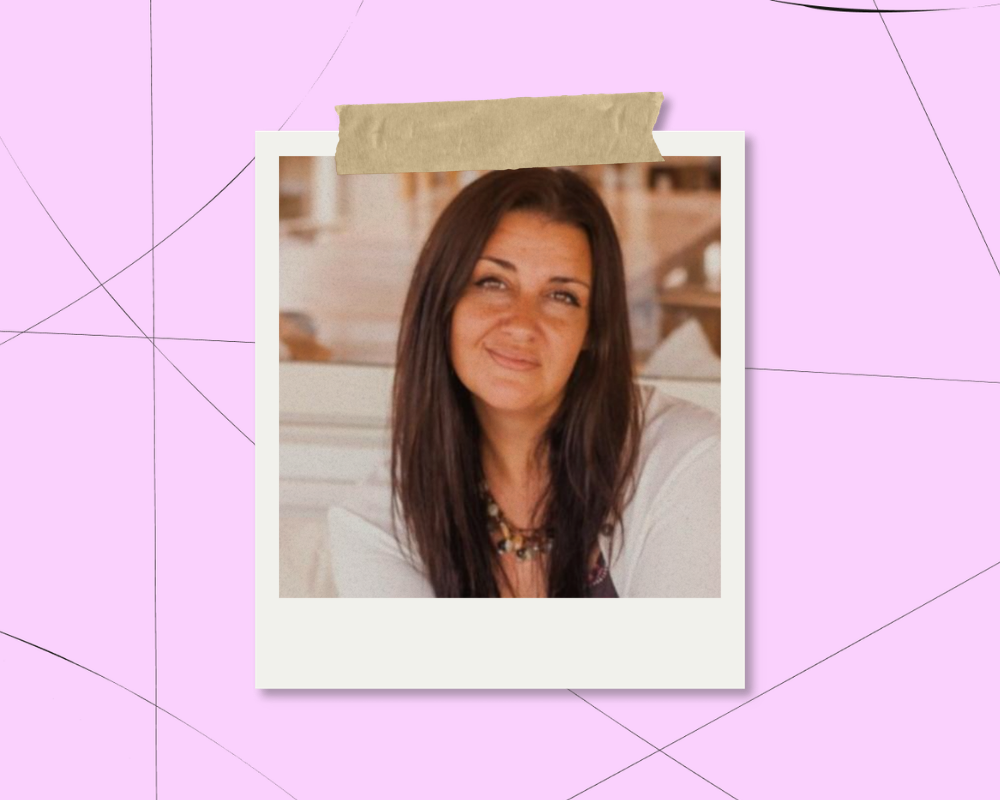
That’s how business expert and Podia Pro Michelle Dale got started. She didn’t have a grand business strategy on day one. She just wanted a way to make a living online to support her love of travel and give her the freedom to work from anywhere in the world.
What began as a way to fund life on the road gradually turned into something much bigger. Today, Michelle offers client services, coaching, education, and community for her audience. She got here by testing ideas in her own business first, staying focused on what created momentum, and listening closely to the people she was helping.
Along the way, she developed a repeatable six-figure launch system that has helped countless clients grow businesses they genuinely enjoy running. (More details on that coming up!)
Here’s how Michelle built a flexible, sustainable business by starting with the skills she had, experimenting as she went, and letting real-world results guide her next steps — and how you can take the same approach in your own work.
The terrible moment that unlocked a new path forward
Twenty years ago, Michelle lived in the UK with a good job, a nice house, and success in every conventional sense of the word. On paper, everything looked right. But underneath it all, she felt a pull toward something more — more freedom, more adventure, and more control over how she lived and worked.
That tension came to a head one day when Michelle returned home from work to find her house had been completely robbed. Michelle walked through the empty rooms, and the shock of the tragedy forced her to ask a simple question.
Now that everything is gone, what do I want my life to look like moving forward?
As she moved through the house, Michelle noticed her passport lying on the floor. In that moment, she decided to treat the situation as an opportunity for a clean start.
She booked a one-way ticket out of the UK and committed to building a life with more freedom and flexibility. Over the next 11 years, Michelle traveled as a digital nomad through Egypt, France, Spain, Italy, and Greece, eventually returning to Egypt long-term.
Of course, traveling requires income. So throughout that time, she built a business that supported her new life, shaped by the realities of working while constantly on the move.
Building a business by testing things in real life
Michelle needed work she could do from anywhere, which led her to virtual assistant services. Virtual assistants are freelancers who help other business owners with admin tasks, like managing their inbox, organizing their calendar, or helping with social media.
With her existing computer and office skills, Michelle began helping other business owners with websites, email, and technical tasks, all from her laptop, wherever she happened to be in the world.
She found her first clients through online business directories, small networking forums, and by reaching out to contacts from her previous career. Some people were skeptical, but she got a few bites, and over time, her services began to spread through word of mouth.
As she worked with virtual assisting clients, Michelle quickly realized she needed a website of her own. So she taught herself how to build one.
“I’ve got to build myself a website, so I learned how to build websites. I’ve got to do design, so I learned how to do design,” she remembers.
Soon, clients began asking for websites, too. Each new request pushed Michelle to learn something new, and each new skill came from solving a real problem inside her own business first. If something helped her business run better, she learned how to do it and then offered it to clients who needed the same solution.
“I built these little stepping stones over time,” she shares, “and a few years later I realized my passion really came from being able to develop online businesses as a cohesive whole.”
As her work evolved from virtual assisting to big-picture business building, Michelle added coaching and training alongside her done-for-you client services. With each new offer, one rule stayed consistent: she tested every recommendation on her own business before ever using it with clients.

“If I’m going to do it with a client, I’ll always do it for myself first, and make sure I know that my systems work, my methods work, my techniques work,” she explains.
When her approach brought in real-world results, she would translate what she learned into education, coaching, and lessons inside her programs.
Choosing tools that support experimentation
That trial-and-error mindset was put to the test when a platform Michelle relied on to build businesses for clients changed ownership. It was eventually shut down, leaving Michelle and her clients without a virtual home base.
“I had to jump out of a system that I’d been in for years, that so many of my clients were using,” Michelle says.
“I didn’t know what I was doing, and I tried so many other systems during that time. Everyone claimed they were an all-in-one, and I tried them all. But when I came across Podia, I said, ‘Done. This is it.’”
With websites, digital products, email marketing, and audience management, Podia had everything Michelle needed to run her own business while also setting clients up for success.

Most importantly, Podia was easy to use, so her clients weren’t completely reliant on her for every update. Her clients could make small website and product changes themselves whenever they wanted without having to reach out for help.
That independence gave her clients more freedom and gave Michelle the space to focus on her biggest experiment yet.
The six-figure launch system (that you can use in your business too)
After years of testing and refining ideas inside her own business, Michelle reached a major milestone: her first six-figure launch. She was able to replicate it for clients, too, helping them reach their launch goals using the same framework.
Michelle’s system isn’t about last-minute promotions or guesswork. It’s built on consistency, preparation, and ongoing connections with your audience over time.
“I think the consistency in always growing your subscriber list is really key, and then you have to be prepared to put the work in. Winging something and just thinking you’re going to throw a few emails out is not going to work.”
Instead, Michelle recommends the following launch system to build momentum and get people excited about what you teach, so they’re ready to buy on launch day.
First, in the run-up to a launch, you should be consistently emailing your audience.
These emails don’t need to be salesy, but you should be sharing useful information, tips, and bite-sized insights that keep you top of mind.
“A lot of people think less is more with email,” Michelle shares. “I’ve found for these six-figure launches, more is more. Stay in contact, but in a really friendly, human way, as you’re preparing for your launch.”
Next, invite your audience to join a free three-part video training series and live webinar that gives them a taste of the full program.
The video series and subsequent live webinar give your audience a glimpse at what they could learn from you, and how their life could transform if they joined.
Each video should break down a core concept from the full program into something practical and actionable. By the end of the series, viewers should be able to implement what they’ve learned and see real results. They might even feel surprised by how simple and effective the process feels.
The video series then leads into a free live webinar, where you’ll teach people a key part of your framework and introduce the paid program.
“The idea is that at the end of the webinar, they’ve got a good start, but there are still some missing pieces. To get the missing pieces, they have to buy the full program,” Michelle says.
To figure out what topics to cover in your videos and webinar, work backwards:
- What’s the final transformation that someone will experience when they buy your product?
- If you were to break it down into a series of steps, what would step one be?
Then, show viewers how they can achieve that first step in your three-part video training and webinar, so they feel confident and excited for step two (and the rest of your program).
After the webinar, open the program for four to five days.
Having a shorter open window creates urgency, and it’s easier for you to keep the energy high without burning out. Throughout that window, stay actively engaged by answering questions, addressing concerns, and reminding people what transformation they could achieve if they join.
This is the same system Michelle used to reach her six-figure launch, and once it worked for her, she repeated the process with her clients. Now, you can use the same steps in your business too.
Turning proven strategies into systems that help others
Today, Michelle’s business brings together everything she’s learned from years of experimenting and tracking results. She works one-on-one with clients to develop and grow their businesses, helping them clarify their offers, build systems, and work toward specific goals.
Alongside that client work, she runs 1nSourcing Training Courses, where she translates what she’s learning in real-time into training and coaching for people who want to build service businesses DIY-style.
Community also plays a central role in Michelle’s work. Through her virtual coworking membership, she’s created a place for entrepreneurs to connect, collaborate, and stay grounded while building online. This community also gives Michelle a direct line of communication with her target audience, so she can make products that solve their pain points.

Everything Michelle offers now is rooted in the same process that shaped her first six-figure launch. She builds it, tests it in her own business, refines it through client work, and then turns it into something other people can benefit from too.
Michelle Dale’s advice for business owners
When offering advice to creators building their first business or refining an existing one, Michelle always comes back to clarity and simplicity.
“First, get really clear on what that business is and what you want it to look like,” Michelle recommends. “What’s your goal? What’s your end result?”
Once that’s clear, the next step is designing the simplest possible structure to support it.
“Start with a basic structure at the beginning. You really just need subscribers and an email list, a free product, and a paid product, for example. Get those ingredients together before you start making the recipe.”
While it can be tempting to get caught up in lots of fancy tools and complex systems, Michelle encourages people to start simple with those core ingredients.
“I find it tends to work best if you start small and then grow it organically,” she says. “As you start building a business, you’ll get feedback from people, from customers, from clients, you’ll add things in.”
“You don’t need everything perfect, you don’t need everything set up from day one, you can update your website as often as you want to — every day if you like!”
Just as important is resisting the urge to chase every new tool, feature, or platform that promises faster results. Instead of trying to do everything, Michelle encourages creators to trust that clarity and consistency matter more than complexity.
“Avoid the shiny object syndrome, avoid the feeling that everything’s got to be done already and perfect, just start with what you have and build on it gradually. And when you find something that you’ve proven can work really well, expand in that direction.”
Ready to build and test your ideas like Michelle? With Podia, you can start simple, figure out what works, and grow from there, all in one place. Start your 30-day free trial today. We can’t wait to see what you make.


