


I love a good side hustle. I’ve tried more than I can count over the years, and one thing that became obvious pretty quickly is that some are great, and some are not so great.
A lot of people start side hustles hoping to earn meaningful extra income, but many popular ideas sound better on paper than they are in real life.
You end up spending hours on tasks that barely pay, or you need highly specialized skills, or you find yourself applying to platforms and waiting for approval just to earn a few cents answering surveys.
It’s easy to find side gigs from home that promise a quick win, but often, these don’t lead anywhere sustainable.
So that’s why this guide takes a different approach.
Instead of chasing tiny payouts or signing up for yet another app that promises the world, we’re focusing on side hustles you can start right now (today, even!) that set you up for real income long into the future.
Because the truth is that the only side hustles worth your time are the ones you control. The ones that grow with you. The ones that could eventually replace your 9–5 day job if that’s what you want (but one thing at a time).
Keep reading, because in this article, we cover:
- Why people get stuck in low-earning and low-control online side hustles, and what you can do differently to build something that lasts
- 5 online side hustle ideas that you can do from home, based on your existing knowledge and interests
- 10+ examples from real entrepreneurs who are putting these ideas into practice
- A simple roadmap you can use to go from first sale to steady revenue
Here’s how to make extra money from home that lasts, doing a side hustle you enjoy.
5 online side hustle ideas to make extra money
Most side hustle lists point you toward gigs that sound easy but don’t have a ton of growth potential. The whole point of having a side hustle is to bring in extra money and add a bit of security, right? But there’s nothing secure about relying on an app or site that could change the rules, payouts, and algorithms at any time.
The ideas in this guide work differently.
Instead of relying on a third-party platform, you’re building something around your interests, your skills, your experience, and the things people already come to you for.
You’re building the foundation of a side hustle that can grow, rather than squeezing a few dollars out of your spare time.
Think of the ideas below as five different ways to package what you already know. You choose the topic — something you enjoy, something you can help people with — and each idea gives you a flexible framework for turning that into real income.
- Sell digital products
- Start a membership community
- Offer freelance or virtual assistant services
- Start tutoring or teaching online
- Write a blog and monetize it with affiliates
If you’re great at design, music, admin work, fitness, marketing, pet care, yoga, woodworking, hula hooping, teaching science, writing, or anything else, you can use one of these five formats to package everything up and start making money. (Yep, those are all real businesses we’ve seen on Podia.)
We have another guide that walks you through how to launch your side hustle, but for right now, the goal is simple. Find the container that best fits the expertise you already have, and build something that keeps you in control of your future income.
#1 Sell digital products like downloads, templates, and courses
Selling digital products is one of the easiest, most evergreen ways to start an online side hustle because you create something once, and it can earn extra income over and over again. Unlike physical products, there are no shipping costs or inventory to manage.
Digital products come in many forms, but three of the most popular ones that we see are:
- Downloads like printables, planners, ebooks, checklists, travel guides, or workbooks
- Templates for Canva, Notion, spreadsheets, or other tools people use every day
- Full online courses that walk someone through a new skill step-by-step
Basically, a digital product is a way to package what you know into something useful that people can buy and use immediately.
The best digital product ideas come from the skills, hobbies, or experience you already have, especially the things people naturally ask you for help with.
Maybe you’re a parent who creates fun activities for kids, a teacher with classroom resources other educators wish they had, a musician who loves teaching friends how to play guitar, or a developer who can break down complex concepts in a clear, friendly way.
Pick an area you know well, choose a small problem you can help someone solve, and turn that into a product.
(Pro tip: Before you make anything, talk to a few people in your target audience — parents, teachers, guitar students, developer friends — to make sure your idea resonates.)
Mark Moeykens of Big Mountain Studio does this through his collection of SwiftUI ebooks for developers. His ebook digital downloads come with images, written descriptions, and video walkthroughs, and customers can buy them individually or as a bundle.
His downloadable ebooks are always available so people can learn at their own pace, and Mark earns income around the clock without needing to be online 24/7.
Templates work just like downloads, but with one key difference: they’re meant to be customized. Customers buy them, plug in their own content, and instantly have something polished they can use.
We see tons of successful template-based side hustles on Podia, and Canva templates, Notion dashboards, planners, spreadsheets, brand kits, and social media packs are especially popular.
Levee Road Studio, for example, sells Canva Pinterest templates that make content creation faster for small business owners. Buyers simply swap in their own colors, titles, and images, and they’re ready to post.
If you have a topic that requires more explanation, you can package your knowledge into an online course. Courses break your content into modules and lessons, so you can teach step-by-step without overwhelming your students. Lessons can include videos, text, images, downloads, quizzes, and other content.
Podia Pro Marie Drouvin does this brilliantly in her course about web design fundamentals, which also includes instructions on how to build your entire website in Podia. Courses allow Marie to reach hundreds of students without spending all day in one-on-one sessions, but she also offers done-for-you services for those who need more support.
How to get started:
If you’re selling a digital download or template, you can create your file using a tool like Canva, Google Docs, or any other word processing tool you prefer. Export your file as a PDF.
If you’re creating an online course, write your outline, film your videos, and write your content, then add it to an online course platform like Podia so your students can work through it easily.
In your Podia account, you can add and update your digital products in the “Products” tab.
- Choose the type of product you’re selling (download, coaching session, course, etc.)
- Upload your files or course information
- Give your course a title, description, and feature image
- Set your price (you can create payment plans, one-time pricing, and subscription options for your buyers)
- Press Publish
Podia will automatically generate a sales page and checkout page that you can share with your audience. When someone makes a purchase, they’ll get a link to their files or course materials so they can access them right away.
You can always add on more as you grow, but the best way to start is simply to press publish. Your side hustle is officially live.
#2 Start a membership community
Unlike a digital product, which is more static, a membership or community is something that grows with you and your audience. Members pay monthly or annually for access, and you add new content or experiences on a regular schedule.
A membership works especially well for creating accountability, community support, ongoing learning, or a space for people to connect over a shared interest or identity.
And because people pay a monthly or annual membership fee, this setup can be a stable, predictable source of side-hustle income.
Like with digital products, your membership idea can start from your existing skills, and you don’t need a huge audience to launch. Think about what topics people gather around, and what kinds of information you’d be happy to talk about week after week.
Some community examples to get the wheels turning:
- Start a paid book club with monthly discussions, live calls, and reading guides
- Build a learning community that helps members reach a shared goal (writing, language learning, productivity, meal prep, art)
- Run a fitness community with weekly workouts, Q&As, check-ins, and space for members to share milestones
- Build a mindset or accountability community for people working toward personal goals like decluttering, budgeting, healthy habits, or stress reduction
- Start an entrepreneurship community where you share monthly trainings, coworking sessions, templates, and office hours for entrepreneurs
- Run a creative writing circle with monthly workshops, feedback sessions, and exclusive “ask me anything” sessions with authors
- Set up a Patreon-style support community where fans get exclusive content, behind-the-scenes updates, or early access (good for musicians, YouTubers, podcasters, and other creators with an existing fanbase)
Leslie and Matt at LMNTL, for example, run a membership focused on self-care and conscious living. Members get access to weekly yoga classes, masterminds, coworking sessions, and a supportive space to grow alongside others.

Rob Williams of Folyo runs a paid membership for web design agency owners. He curates high-paying design leads from across the web and delivers them directly to members. Agencies stay subscribed because the membership consistently saves them time and helps them land new clients.
And Lisa Bardot runs the Art Maker’s Club, a membership where artists can learn how to use the Procreate digital art platform and share their creativity. There are monthly live tutorials and drawing sessions, as well as exclusive Procreate brushes for participants.
Even though they all cover different topics, all three memberships work because they consistently provide value and allow people to connect.
How to get started:
First, outline the purpose of your membership. What transformation or benefit will people get by being part of the group?
Then plan your programming. What content will people get each month? Think about things like live calls, discussion spaces, templates, challenges, new lessons, or behind-the-scenes updates.
You don’t need a huge content library on day one, just a clear outcome and a simple plan for what members can expect.
Next, decide which platform you’ll use to build your online community. With Podia, you can host everything in one place, so your community is automatically connected to your products, website, email newsletter, and new content as you add it.
Inside your Podia account admin area, head to the Spaces tab to set up different discussion areas.
- Create your community spaces (ex, “Monthly Workshops,” “Discussion Feed,” “Wins + Accountability,” or other topic-based areas)
- Enter your Podia community
- Add any welcome posts, starter content, or upcoming events so new members know exactly what to do first
Then create your plans and pricing:
- Click into the Plans tap and click “New Plan”
- Add a description, title, and feature image in the Details tab
- Add access to any spaces or products that come with that plan
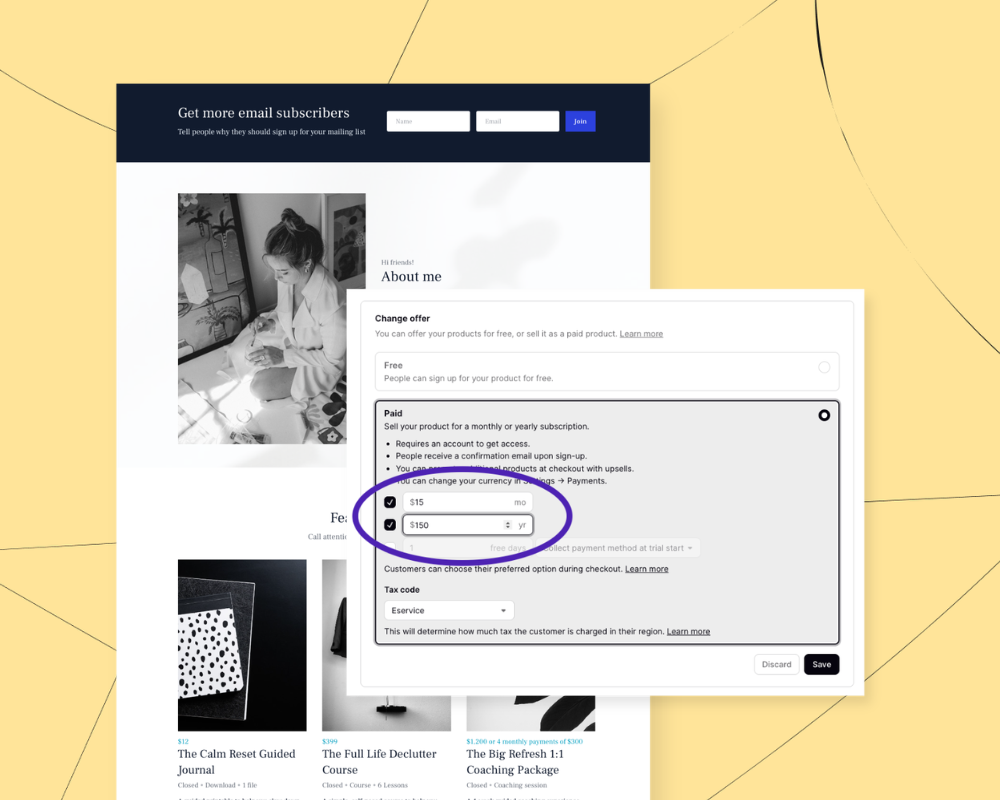
- Set your monthly and annual pricing
- Press Publish
Podia will automatically generate a customizable plans page with all your membership tiers, so all you need to do is share the link with your audience. When someone joins, they’ll get immediate access to the community spaces and any content included with their plan.
#3 Offer freelancing or virtual assistant services
If you want a side hustle you can start quickly without creating a product for people to buy, freelancing is one of the most reliable ways to earn money online. Instead of selling a digital file or a membership, you’re selling your time and skills directly to clients who need help.
Almost anything you know how to do can become a freelance service.
Admin work, writing, editing, design, customer support, project management, coding, video editing, bookkeeping, Pinterest management, newsletter writing — if you can do it well, there’s probably someone out there who would rather pay you than do it themselves.
One popular service people offer on Podia is virtual assistance. Virtual assistants (VAs) are the backbone of many online businesses, and as a VA, you might:
- Do basic website updates and admin
- Manage inboxes and respond to questions
- Schedule content and engage on social media for your client
- Organize calendars
- Handle customer support
If you’re organized, reliable, and comfortable with digital tools, many business owners will happily pay for your help. VAs often offer one-time strategy sessions, monthly retainers, or done-for-you packages so income stays predictable.
For example, Podia Pro Michelle Parks from MP Virtual Assistance offers hourly virtual assistance and online tech training courses for her solopreneur clients.
Another in-demand freelance path is social media management. Business owners often need help creating posts, planning content calendars, responding to comments and DMs, and keeping their accounts active. If you enjoy content creation or have a knack for online communication, this is a natural fit.
Britt from Britt Does Social offers a mix of freelance work for her clients, including strategy calls and done-for-you social media management, and she also sells courses for people who prefer to learn the skills themselves.
No matter what skill you offer, freelancing puts you in control. You set your rates, choose your clients, and decide how much you want to take on. And unlike many side hustle “gigs” that pay pennies, freelancing lets you charge for your expertise, making it one of the fastest ways to earn meaningful income online.
How to get started:
Start by listing the skills you already have that other people or businesses might need.
Things you’ve learned at work, school, or in daily life can become a service, like writing blog posts, managing social media, creating graphics, updating websites, handling email correspondence, organizing calendars, or offering customer support.
Next, set up a simple website or landing page outlining what you offer. With Podia, you can create a services page in minutes where you list your packages, describe what’s included, and give people an easy way to book you.
If you’re offering social media management or virtual assistant services, decide whether you want to provide one-time support (like account setup or an audit) or ongoing monthly management.
Then share your new service with your network. Word-of-mouth is one of the fastest ways to land your first clients, and friends, coworkers, neighbors, and even a friend of a friend might know someone who needs help but doesn’t have time to do everything themselves.
(Pro tip: You can use Podia’s coaching product type to connect your calendar, set your price, and allow clients to book and pay for their onboarding call directly through your site.)
#4 Start tutoring or teaching online
While freelancing is about doing work for someone, teaching is about showing someone how to do it themselves.
If you have a skill you can explain clearly, whether it’s academic, creative, technical, or something you’ve picked up through experience, online tutoring is a powerful way to turn that knowledge into income.
People are looking for guidance in every subject imaginable: music lessons, language learning, test prep, math and science support, writing help, design skills, photography, coding, career development, creative hobbies, and even niche professional topics.
If you can help someone make progress faster than they could on their own, you can build a teaching side hustle around it.
You can start with simple 1:1 tutoring sessions, but you don’t have to stay there. Many online teachers eventually turn their lessons into group workshops, memberships, or self-paced digital products so they can teach more students without needing unlimited hours.
For instance, Tiffani from Study with Tiffani primarily works with English language learners through digital products and ebooks, giving thousands of students a way to study on their own schedules.
And Joseph from FlexLessons offers 1:1 classical piano lessons as well as online courses and a monthly piano membership program where learners can ask questions and get feedback.
Teaching or tutoring online is ideal if you enjoy helping people grow, want flexibility in how you work, and like the idea of building a side hustle that can scale as your audience grows.
How to get started:
The simplest way to begin teaching online is to offer a 1:1 coaching session on your Podia website. Pick a topic where you can confidently help someone improve, set a price, and connect your booking calendar so students can choose a time and pay in one step.
Offering individual sessions is often enough to land your first few students, learn what people need help with most, and refine your teaching style. (You can even offer your first few tutoring sessions for free to build your client base and get some experience.)
Once you feel comfortable, you can expand into multi-session packages or small group workshops.
If you want to reach more students without teaching live every day, you can also record your lessons and turn them into digital products (like courses, ebooks, or study guides) that students can use anytime. This creates a mix of live and self-paced learning that grows your income without adding more hours to your schedule.
#5 Write a blog and monetize it with affiliate marketing
Okay, I’m a little biased here because blogging was my first side hustle (and main gig) for years, but that’s exactly why it’s on this list.
Blogging isn’t a “make money overnight” side hustle. It takes time, consistency, and patience. But if you love writing and you enjoy sharing what you know, it can grow into a rewarding and flexible (and frankly, humbling… but that’s entrepreneurship) income stream.
Setting up your blog is quick and easy — you can use a tool like Podia to have your first few blog posts live in an afternoon. The income comes later, once your posts start getting search traffic. But when it does, it can feel magical.

Here’s how it works: a reader types a question into a search engine, and your post appears in the results. The reader clicks your recommendation, buys something they need, and you earn a commission.
Start by choosing a niche that you enjoy (you’ll be writing about it a LOT) but that also naturally aligns with products people buy.
- Parenting blogs can recommend toys, books, and tools that parents already search for
- Travel blogs can recommend hotels, gear, and tours in destinations you cover
- Sports blogs can recommend equipment, apparel, and training tools
- Productivity or business blogs can recommend software, apps, books, or office gear
Then, join affiliate programs for products you genuinely use and trust. Amazon has a massive program, but many brands also run their own affiliate programs. You can often find them in a website’s footer or by searching an affiliate marketplace like Impact, LTK, or Awin.
Once you join, you’ll get a unique tracking link you can include in your blog posts. If a reader clicks that link and makes a purchase, you earn a commission.
But to be successful with blogging, you can’t just write anything and sprinkle links everywhere. The blogs that earn consistent income are the ones that answer real questions, solve reader problems, or share helpful firsthand experiences.
SEO (search engine optimization) also plays a big role. With SEO, you write articles that target specific questions or phrases people are typing into Google. The better your posts match those searches, the higher your articles will appear in the results and the more visitors you’ll get, which means more opportunities for affiliate sales.
Blogging usually takes longer to ramp up than creating a digital download or offering a freelance service, but it has one major advantage: a blog post you publish today can still get discovered and generate income years from now.
And the more posts you write, the more potential income streams you build.
If you enjoy writing and want a side hustle with long-term earning potential, a blog might be your next step.
How to get started:
Blogging is included on all Podia plans, so if you haven’t already, grab your 14-day free trial and open the Blogging tab inside your dashboard.
From there, you can start drafting posts, customize the design of your blog in the website builder, and publish everything on one connected site.
Choose one main idea or question for each post. Your goal is to write an article that fully answers that question so search engines know exactly what your post should rank for.
Once you hit publish, promote your post to help it gain traction. Share it on your social channels, send it to your email list, and participate in online groups, Reddit threads, or forums where people are already talking about your topic. The more helpful your content is, and the more places you share it, the faster your blog will grow.
As you continue writing, your library of posts grows and brings in more readers, who in turn buy more products and drive more affiliate earnings.
Now that you have your online side hustle idea, here’s how you grow it
Once you’ve chosen your online hustle, the next step is building the system that helps people find you, trust you, and eventually buy from you. No matter what type of side gig you start, the same core pieces apply.
1. You need an audience
Start by posting helpful, free content on platforms you actually enjoy using. This could be Instagram, TikTok, your YouTube channel, a podcast, or a blog. Basically anywhere your ideal audience already spends time.
Your free content should relate directly to what you sell. If you create content about gardening, the people who follow you should be people who want gardening help. If you teach piano, your videos or posts should speak to beginner pianists. Free content attracts the right people and gently leads them toward your paid offers.
2. You need an email list
Once someone finds your content, you want a reliable way to stay in touch. The best way to do this is through email. An email list lets you connect with your audience directly (without worrying about algorithms), share helpful tips, and announce new products or services.
You can offer a free resource like a checklist, planner, short tutorial video, or guide as an incentive for people to join your list. This is called a lead magnet, and it shows people how you can help them while making your email list even more attractive.
Once they sign up, you can welcome them with a simple automated email sequence that introduces who you are, what you offer, and how you can help.
After that, send regular newsletters to stay top of mind and build trust. That way when you do have a paid product to promote, your readers will already be accustomed to hearing from you.
3. You need a place to sell
Whether you’re offering a service, course, membership, template, 1:1 lesson, or anything else, you need a website where people can learn about what you offer and make a purchase.
In Podia, you can build your website, host your products, collect email addresses, and send newsletters all in one place. Your content brings people in, your email list nurtures them, and your website and sales pages turn their interest into income.
When you combine these pieces, you build an engine that keeps your side hustle going even when you’re not sitting down to work on it. The system works no matter your niche, and it grows more powerful the longer you stick with it, so you can earn extra money from home in the future.
Turn your online side hustle idea into a real business with Podia
The cool thing about all the side hustles on this list is that you can start small, put in a little elbow grease, and see where it takes you.
And with Podia, you have everything you need to set up your website, publish content, sell products, and grow your audience all in one place. Start with the idea that feels right, take the first step, and let your side hustle grow into something real, sustainable, and uniquely yours.
Start your 14-day free trial today. I can’t wait to see what you make.


