

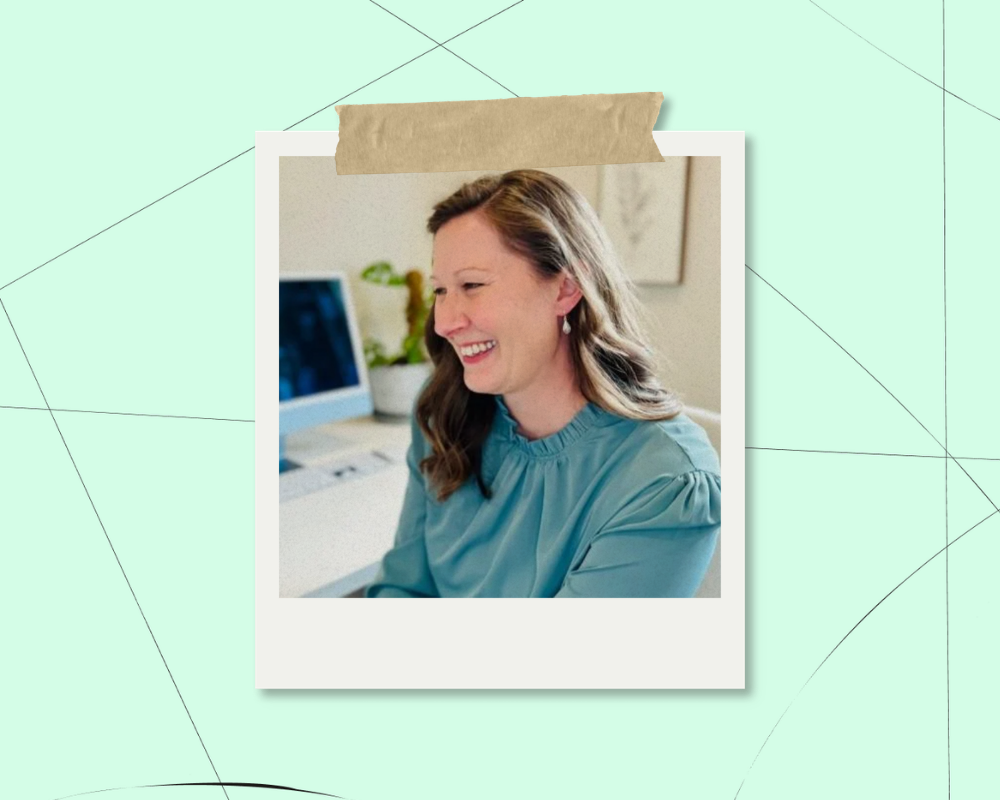

Before Michelle Parks started her own business, she worked in the bus department for one of the biggest school bus operations in her state, fielding calls from frustrated parents first thing in the morning.
"I started work at 7:30, and by 7:35, I had been cussed out by at least one parent," she says. "Every morning."
So when her husband changed jobs and Michelle had the opportunity to step away from her challenging 9-5, she decided to see what it would look like to build a business of her own.
She started with virtual assisting to figure out what kind of work she liked best, and ultimately turned that into a flexible, fulfilling online service business that helps people build great businesses of their own.
Here's how Michelle:
- Turned a career pivot into a chance to test lots of things and find work she loved
- Found her first clients through people already in her network
- Runs her whole service business, from onboarding to email marketing, inside Podia
If you want to build a flexible service-based business like Michelle, you can start your 14-day free trial of Podia today.
If you don’t have a direction yet, start general
In the early days of her virtual assistant business, Michelle said yes to almost everything that came her way. This was intentional, because she wanted to see what types of services were the most enjoyable and aligned with her skills.
"In those initial connections, I was really just open to doing lots of things," she says. "In the beginning, it seemed like I was learning a new program and a new skill for every new client."

Taking on a wide range of work was how she learned what she actually wanted to do.
"It was a really great experience, because it gave me a lot of first-hand knowledge about all kinds of tools. I could learn what I liked and what I didn't like doing. And then from there I could hone in."
Some of that work also taught her what to walk away from.
Michelle learned Pinterest inside and out, a skill plenty of people would happily pay for, and realized she couldn't stand it.
"I learned the Pinterest algorithm, and I learned how to optimize it and make pins, but I hated doing it," she says.
But learning what to say no to in your business is just as important as deciding what stays. By deciding that certain skills and services weren't for her, Michelle was able to reduce distractions and spend more time on the work that felt like a good fit.
Finding first clients through connection and conversation
Michelle's first client came from someone she already knew, a friend who worked as a real estate agent. For service providers and virtual assistants, Michelle explains that the best place to start is to talk with friends and family members who have their own businesses.
"My first client was a friend of mine who was a real estate agent, and when she heard that I was doing virtual assistant work, she said, 'Oh my goodness, it'd be great if somebody wrote my newsletter and sent it out for me.' And I said, 'Cool! I'll do that!'"
Her next client came from a community she was part of. Michelle followed a content creator who ran a community for spouses of police officers (Michelle's husband is in law enforcement). One day, the creator asked her audience what questions they had about running an online business.
Michelle chimed in with no intention of pitching anything.
"I just asked what the difference was between having an LLC and being a sole proprietor, because I want to start a virtual assistant business," she says.
The creator wrote back almost immediately, asking if Michelle was available to help her with a new project.
"She asked if she could hire me to learn this program and run her annual online conference. She didn't have time to do the setup, and needed extra support behind the scenes," Michelle remembers.
That program was Podia. "So she paid me to learn Podia and set up her conference for her members."
Michelle still handles the tech for that same event. "She runs her yearly conference on Podia," she says. "For the last several years, I’ve done all of the tech setup for her."
From there, Michelle's client base grew mostly by word of mouth. That first creator referred her to several other people, and today new clients find her through her educational content too.
"I'm not the best at marketing on Instagram and putting myself out there, and so I try to have a very education-based platform," Michelle says. When she's not working on client projects, she creates tutorials and software walkthroughs for different tools.

This is often the kind of content other entrepreneurs are looking for, and her educational guides bring new people in so they can check out her website, schedule a discovery call, and inquire about done-for-you services.
Finding work that sparked joy, and leaning in
Taking on a wide variety of clients and testing all kinds of virtual assistant services eventually pointed Michelle toward the one thing she wanted to specialize in. She'd learned Podia well through her early conference client and loved it, so she moved her own business over and applied to become a Podia Pro.
Narrowing her focus down to Podia turned out to be the biggest win in her business.
"It revolutionized my business because it gave me something to focus on," she says. "I was doing all things for all people. This platform for this person, that platform for that person, these three platforms for this other person."
Going deep on one area meant she got faster and more confident, instead of learning a new tool and building a new workflow for every project.
How Michelle runs her service business inside Podia
In addition to helping clients get set up on Podia, Michelle also uses Podia to run her own service business.
Her most popular offer is a block of four virtual assistance hours that she sells as a coaching product. Potential customers can sign up for a free discovery call, and if they're interested in moving forward, they can buy the package directly from her Podia website. From there, most of the onboarding happens on its own.
"They get the link to schedule intro meetings automatically, and they get the intake form automatically through a Podia email campaign," she says. "There's no more chasing down invoices or a gazillion emails going back and forth, because it's all set up with Podia and an automated campaign email or two."

The biggest win is the time savings. "Having things automated saves so much admin time. I love it. I would not do it any other way now," she says.
Michelle also has a hybrid "do it yourself" and "done for you" offer, which she sells as a course in Podia. Clients first work through course lessons on writing their own copy and gathering their images. Once they complete the course, they hand everything over to Michelle so she can set up their website for them.
It's designed for people just starting out, which is where her heart is.
"I just know how hard it is to find information and help when you're still in that beginner price range," she says. "With this offer, I'm trying to help those people who need support at the early stages. I've got a soft spot for them."
If a prospective client isn't ready for a discovery call or a paid product just yet, Michelle also offers a downloadable freebie as a lead magnet.

This gets people onto her email list where she can communicate with them and let them know about new offers and announcements. Even if they aren't ready to buy today, they might be ready in the future, and with regular email communications, Michelle can stay top of mind.
"I love just having Podia as that base, because it just simplifies things so much," she says.
Michelle’s advice? Plan for the future, build in flexibility
When Michelle talks with people who are just starting out, her first piece of advice is about picking tools with the near future in mind.
"I want you to think 6 months to 12 months ahead of time," she says. "Choose a platform that's going to support you in that 12 months."
She learned this one the hard way when she poured countless hours into a tool that ultimately didn't meet her needs.
"You don't want to be locked into something that doesn't support your dreams for the near future," she says. "I spent like 40 or 50 hours building my first website on a platform that I then realized didn't have the things that I wanted to move forward with."
Her second piece of advice is to build for flexibility from the start. Michelle set up her business around a flexible schedule because her husband works unpredictable hours, but that decision ended up carrying her through several hard years, including three moves and losses in the family.
"It isn't easy to stay focused when you have that much going on in your personal life," she says. "I'm super thankful that I built my business with the foundation of a flexible schedule."
Protecting that flexibility means being firm with her calendar and honest with clients about her bandwidth. "You have to be really honest with yourself about what you are able to take on. No over-promising, no trying to do those midnight calls in order to meet demands," she says.
Part of that honesty is deciding for yourself what you're building toward. It's easy to lose sight of what's important when you start measuring your business against other people's income claims or follower counts.
"You get to decide what kind of business you're building, what you stand for, and what success actually means to you," Michelle says. "If you chase a certain amount of profit, you're going to burn out, and you're going to feel frustrated if you don't meet that. Find something that you love doing and pursue it for the passion of it, and the money will follow."
That passion and love for the craft is something Michelle's clients can feel.
"There are so many times people have said that they can tell how much I love this work," she says. "It shows up."
By staying open, trying lots of things, and paying attention to what she actually enjoyed, Michelle built a business that fits her life and lets her spend her days doing work she loves.
If you're ready to build a flexible service business like Michelle, one where you can offer services alongside your courses, community, email marketing, and website, you can start your free trial of Podia today.
Michelle Parks is the founder of MP Virtual Assistance and a Podia Pro who helps creators and small business owners set up and run their businesses. You can learn more about her on her website.


