

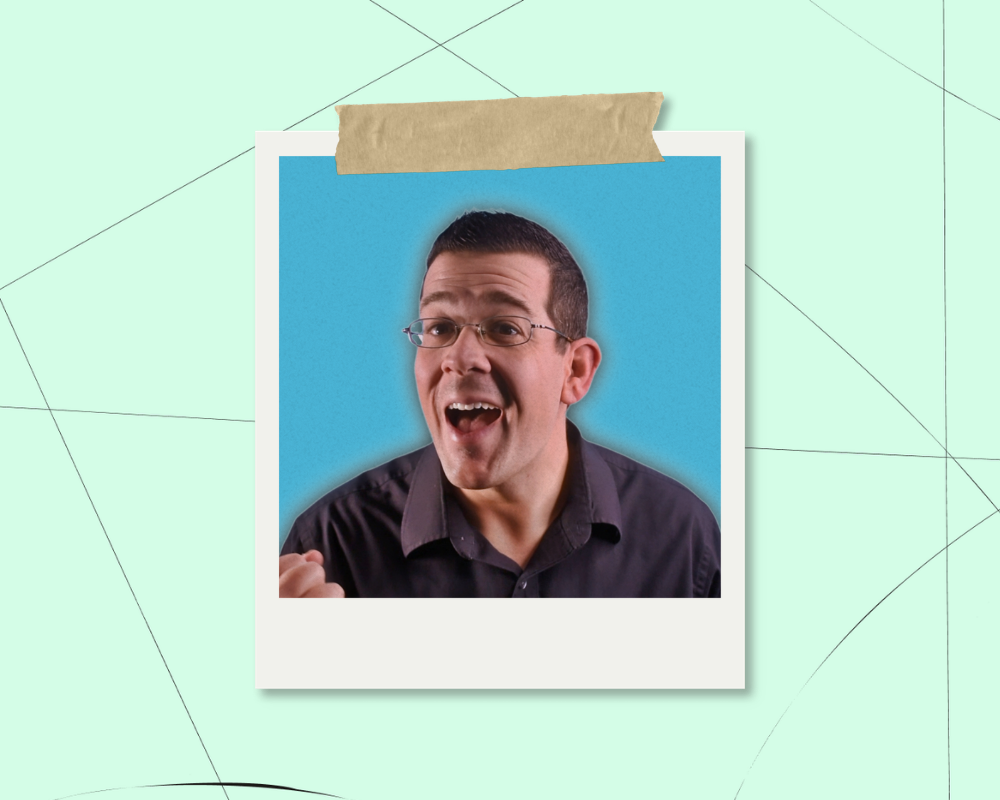

When his Halloween rap video started taking off on YouTube, music teacher Bill Henry had an idea. He'd make a free resource to go along with it and link the freebie in the caption, just to see what happened. That one decision would ultimately help Bill reach a huge audience of ideal customers and shape his whole approach to running his business.
Bill Henry is an elementary music teacher with 20 years of classroom experience. He also runs Mr. Henry's Music World, an online business where he creates curriculum and resources for other elementary music teachers.
He built Mr. Henry's Music World on free content, including YouTube videos, downloadable resources, and lead magnets, and today he has a growing email list, a loyal audience of teachers, and a subscription business he's been steadily building for years.
But all this didn't happen overnight. Like most creators, Bill has juggled different business ideas, big direction changes, and lots of trial and error.
In this article, Bill walks us through how he got here, including:
- How he pivoted from piano lessons for kids to resources for teachers
- The Halloween rap video that changed the direction of his business
- How he built his free-to-paid funnel that's filled his membership with happy customers
- Why he's never spent money on ads, and what he does instead
Here's how it all came together.
It started with a piano course
Before Mr. Henry's Music World became a teacher resource business, Bill had built a piano course for kids. The online course included videos of him playing and kid-friendly explanations of music basics.

He started putting some of those videos on YouTube to drive interest, and the course brought in some sales.
But then something unexpected started happening.
"After I added the videos to YouTube, I was noticing that teachers were contacting me, saying they loved the video and they were going to use it in their classroom."
It wasn't kids or their parents who were showing up. It was teachers. It was such a subtle change, but Bill leaned into it, and it ultimately took his business in a whole new direction.
The Halloween rap that helped Bill find his people
The real turning point came during the COVID years, when teachers were scrambling to keep kids engaged from home. Bill leaned into creating videos that could work in a virtual classroom without requiring a teacher to guide every moment. His idea was to make rap videos that prompted kids to move, clap rhythms, and do body percussion on their own.
The first one was a Halloween rap.
"Prior to that, I was getting some traction on YouTube, but not much," Bill remembers. "That Halloween rap video got 80,000 views within the first couple of days. That's when I realized this could be a real thing."
It was a significant jump from the couple hundred or couple thousand views he'd been getting before, and that boom made something clear: this was the type of content teachers actually needed. Music videos that were fun, engaging, self-directed, and ready to use in a lesson without any setup.

Bill already had Podia set up from the piano course days, and when the Halloween rap took off, he did something that turned out to be one of the smartest moves in his business.
"I decided to make a lead magnet that went along with this Halloween rap video. I just wanted to test it out, and I already had the platform, so I wanted to see if it would get people on my list."
Teachers who watched the video could click through to the description and put in their email address to grab a free resource that Bill had created on Podia. Bill started getting notifications every time someone signed up, which was proof that people were engaging, clicking through, and interested in more resources beyond his free YouTube content.
"I gave free stuff away for a while and didn't even think about creating a product for sale until three or four months later. At that point I was just trying to build up my email list," he says.

Bill knew that an email list was the best way to stay in touch with potential customers. With email, he could reach people directly in their inbox rather than hoping the YouTube algorithm would put his next video in front of them again.
And soon, that time he spent creating valuable freebies for his audience would pay off. For every product, program, or membership he created, he already had a list of people ready to buy, a list he grew by sharing what he loved for free.
How Mr. Henry’s sales funnel works
Today, Bill has a simple sales funnel at the core of his business. Teachers find him on YouTube through videos on recorder technique, rhythm basics, and seasonal music content. Each video is an entry point into his business, and inside each video, he points people toward a free resource hosted on Podia. Teachers sign up, share their email, and become part of his list.
From there, Bill uses Podia's email tools to stay in touch, send newsletters, share new resources, and let teachers know about paid curriculum they can access through his subscription.
"Within an email, I can plug in different things that I already have created in Podia. That was the one thing that I wanted to make sure that I had, a way to stay in touch with everyone in one place. The whole ecosystem works altogether."
This funnel brings in new customers and grows as he creates more YouTube content, and it has never cost him a dollar in ad spend. The YouTube content is the promotion, and the free resources do the work of turning viewers into subscribers.
Building the resource library in Podia
For a long time, teachers could purchase Bill's curriculum and courses individually. They could buy lifetime access to each thing he made, but as his collection grew, a different business model started to make more sense.
"I built up quite a vast number of resources that teachers could buy, and I finally got to the point where I had enough stuff that it made more sense for someone to spend $35 a month to get access to everything."
So Bill launched what he calls the Complete Collection, a single monthly or annual membership that gives teachers access to everything he's built, including recorder curriculum, ukulele curriculum, seasonal content, and other teaching resources. Consolidating everything into one resource library made the value obvious and a much easier yes than buying lots of programs one by one.

The timing was intentional. He didn't want to charge a monthly price for a library that wasn't worth it yet, so he spent years building the content first and let the subscription model follow.
"I finally have put it all together where if you come to the site, you can become a monthly or annual member, and you get access to everything. It's easy."
Why free content beats paid ads
Bill's philosophy on promotion is simple, and he learned it through trial and error. In the early days, like a lot of new creators, he worried that giving things away for free would mean never gaining any real traction. Getting over that fear turned out to be one of the most important shifts he made.
The way he sees it, you're always spending something to get people's attention. That might mean paying for ads, or it might mean spending the time it takes to create content and resources that do the work for you. Bill has always chosen the latter.
"You either pay for promotion, or you create resources that people can get access to."
When you take the free resources approach, you also get a bonus that doesn't necessarily come with ad spend: people who download your free content and enjoy it start to trust you.
When a teacher comes to Bill's paid content, they've already watched his videos, downloaded his free resources, and gotten a real sense of who he is and how he teaches. They're no longer a stranger on the internet. They know who Bill is and they know they like his work.
The Thanksgiving rap he released right after the Halloween one got 240,000 views. He had a free resource to go along with that one too, and his email list kept growing. Every new video was another entry point, and every free resource was another reason for a teacher to stay connected.
Advice for creators who are just getting started
For anyone building from zero, Bill's advice is consistent with how he built his own business: accept that the first chapter is about giving, not selling.
"Get geared up for maybe spending 6 months of just giving things away for free, and building an email list, and just being consistent with it. If you do that, people are going to like you. And if they like you, later on, they're probably gonna buy something from you. I think it's that simple."
He also shares insights about the paid ads question that trips up a lot of new creators. It's not that ads are bad, but they're hard to get right. When you're just starting out, you might not have enough data to spend that money wisely.
"The paid thing can be tricky. It takes time to figure out, and you're paying for it the whole time no matter how it performs. For me, I'll just make my own thing, and people can actually engage with me and what I can do."
His version of promotion takes more time up front, but it builds something real. And if you're creating content you genuinely care about, for an audience you actually understand, it's work that doesn't feel like work.
"If you're genuine and authentic, and what you're giving them is really great stuff, I think it's gonna work out if you keep going."
If you're ready to create something of your own, just like Bill, you can start growing your email list and creating free resources with a free trial of Podia. Podia has everything you need to get started, including membership communities, courses, lead magnets, your online storefront, and email marketing, so you can start finding your people and bringing them into your world. Your first 30 days are free.
Bill Henry creates music curriculum and resources for elementary teachers at Mr. Henry's Music World. You can find him on YouTube, where new videos for teachers drop regularly.


